
What Is AEO? A Plain-English Guide for Business Owners Who Want to Be the Answer
People used to Google you. Now they ask ChatGPT, Siri or Google's AI Overview, and get one answer. AEO is how you become that answer. Here's what it is, why it matters now, and what to do this month.

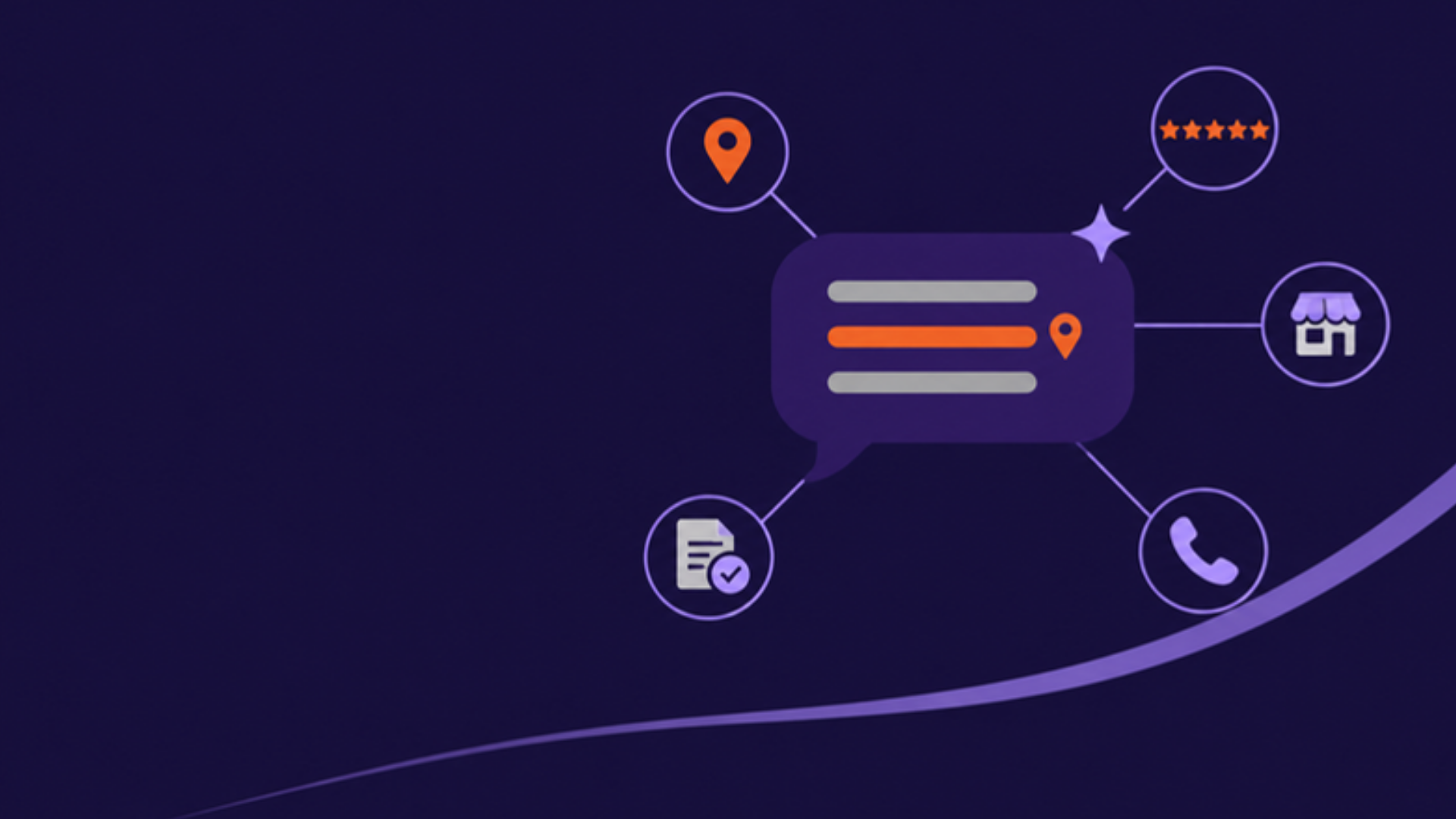
Here's a test. Open ChatGPT, Gemini or Google and type: "best [what you do] near [your town]."
Does your business get named?
If not, you're invisible to a growing share of your customers, and it doesn't matter how good your Google ranking was last year. That's the problem AEO solves.
What AEO actually is
AEO stands for Answer Engine Optimization. It's the work of making your business findable, understandable and worth recommending to AI tools that answer questions directly: ChatGPT, Google's AI Overviews and AI Mode, Gemini, Perplexity, Siri, Alexa, Copilot.
Old search gave people ten blue links and let them pick. Answer engines give them one answer, maybe two or three names. If you're not in that short list, you don't exist for that search.
SEO was about ranking on a page. AEO is about being the recommendation.
Why this matters right now, not someday
A year ago this was a "keep an eye on it" topic. It isn't anymore.
Adobe projects AI-driven traffic to U.S. retail sites to grow 130% year over year this holiday season, with the biggest jump on Thanksgiving Day.
In Adobe's survey of 5,000 consumers, 77% of people who've used AI for shopping say it made them more confident in their purchase. They trust the answer.
Google now shows AI Overviews on a large share of searches, including local ones. The overview sits above the map pack and above the links. People read it and stop.
And the behavior is specific to how people talk to assistants. Nobody types "window tint Mount Pleasant" into ChatGPT. They say "I just bought a black truck, where should I get it tinted around Charleston so it doesn't turn purple?" The tool has to know who you are, what you do, where you are, and why you're trustworthy to answer that.
How answer engines decide who to name
They're not magic. They pull from a handful of signals you can control.
1. Consistent facts about you, everywhere. Your name, address, phone, hours and services need to match exactly across your website, Google Business Profile, Apple Maps, Bing, Yelp, Facebook and the data services that feed smaller apps. Conflicting details make the tool unsure, and unsure means skipped.
2. Content that answers real questions in plain language. AI tools quote pages that already sound like answers. "How much does ceramic tint cost in Charleston?" followed by a clear paragraph with a range and the factors is gold. A page of marketing fluff is not.
3. Structured data behind the scenes. A bit of code on your site that tells machines "this is a local business, here's the category, here are the hours, here are the FAQs." It's invisible to visitors and very visible to AI.
4. Permission to be read. Some sites accidentally block AI crawlers. If the tool can't read your site, it can't recommend you.
5. Reviews and mentions. Being named in reviews, local news, directories and other people's content builds the "this business is real and good" signal. Fresh, specific reviews that mention what you did ("tinted my F-150, done in two hours") help more than a star count.
6. Speed and mobile. Slow pages get crawled less and quoted less.
Notice that none of this replaces SEO. Every item on that list also helps you rank on Google. AEO is SEO done the way customers actually search now.
What AEO looks like for a local business
Let me make it concrete with a golf simulator lounge, since that's a client of ours.
Someone in Summerville asks Google, "Where can I play indoor golf with friends this weekend?" The AI Overview answers with two or three places, a sentence about each, and a map card. To be in that answer, the lounge needs:
A Google Business Profile with the right category, hours, photos and a booking link. A page on its site that literally says "Indoor golf simulators in the Charleston area" and answers the obvious questions: how many bays, how booking works, whether you need to be a member, pricing structure. The same business name, address and phone on every listing. A few recent reviews that mention "simulators," "bays," "booked for a group." Structured data marking it as a local business with an FAQ.
Do those five things and the lounge goes from invisible to named. That's the whole job.
What to do this month
If you do nothing else before the end of the year:
1. Run the test at the top of this post for your three most important searches. Write down what the AI says. That's your starting line.
2. Fix your Google Business Profile. Category, hours, photos, services, booking link. It's free and it feeds every answer engine.
3. Write one page that answers your top five customer questions in plain sentences, with your city in it.
4. Match your business details everywhere. Pick one version of your name and address and make every listing identical.
5. Ask ten happy customers for a review and tell them to mention what you did for them.
Then run the test again in six weeks.
The honest caveat
AEO is new enough that nobody can promise you a spot in an AI answer, and anyone who guarantees it is selling something. What you can control is whether you've given the answer engines every reason to pick you. Most of your competitors haven't. That gap is the opportunity.
Sources: Adobe Analytics 2026 Holiday Shopping Forecast and consumer survey (Sept. 2026); Google Search Central documentation on AI Overviews and structured data.
Nick Sult
Owner & Lead Strategist at CZN Technology Solutions
Eight years in e-commerce, now helping local businesses get found on Google and in AI answers. Summerville, SC.
Book a free consultReady to grow?
Get a Free Growth Plan for Your Business
We'll look at your website, your local presence, and your lead flow — and tell you exactly what we'd do to improve them.
Get a Free Growth Plan